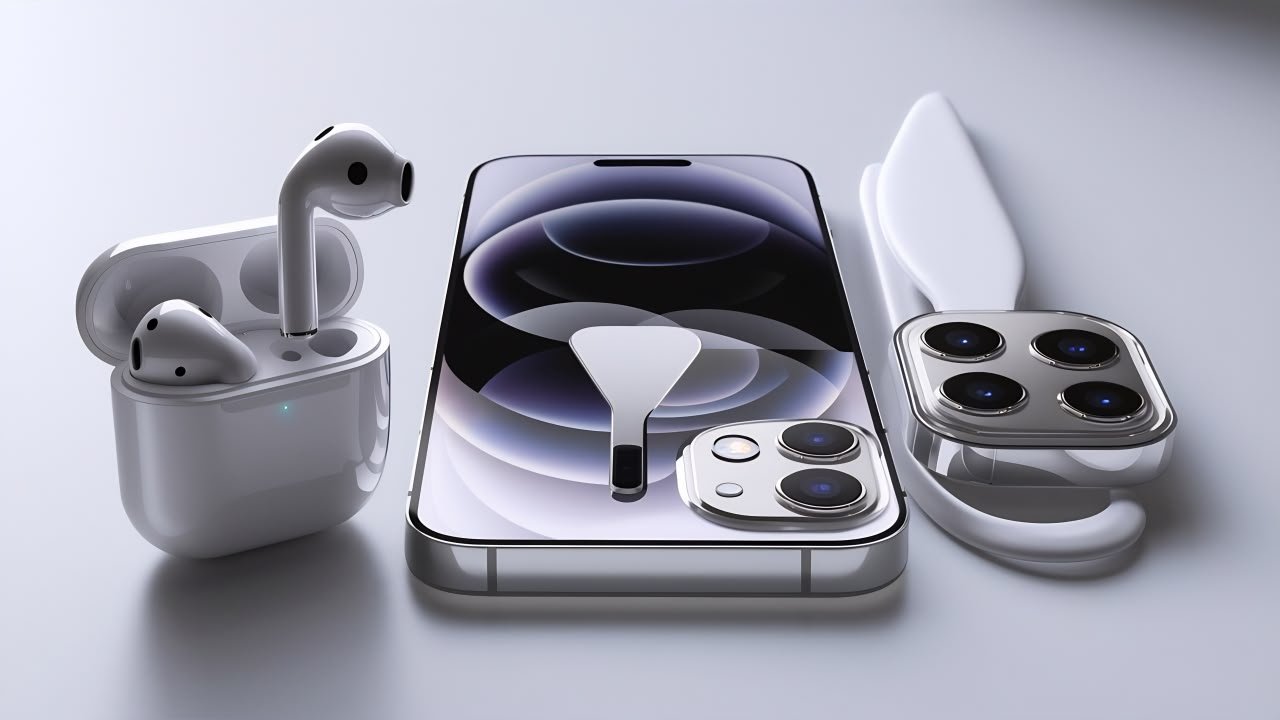
Apple used its Worldwide Developers Conference (WWDC) 2026 to unveil one of its most ambitious software updates in recent years, placing artificial intelligence, privacy, and family safety at the core of its ecosystem. While the company has long emphasized on-device intelligence and user privacy, this year’s announcements signaled a deeper integration of AI across iPhone, iPad, Mac, Apple Watch, Vision Pro, and other Apple devices.
Rather than positioning artificial intelligence as a standalone feature, Apple demonstrated how AI would seamlessly work in the background to simplify everyday tasks, improve productivity, personalize user experiences, and strengthen online safety for children. Alongside these AI-powered enhancements, the company also introduced several new parental control features and privacy improvements designed to give families greater control over how children interact with digital devices.
The announcements reflect Apple’s broader vision of making AI useful, secure, and deeply integrated into daily life while maintaining its long-standing commitment to protecting user data.
Apple Continues to Expand Its AI Vision
Artificial intelligence has become one of the biggest battlegrounds in the technology industry, with nearly every major technology company investing heavily in generative AI, machine learning, and intelligent digital assistants.
At WWDC 2026, Apple made it clear that its approach differs from many competitors. Instead of focusing solely on chatbot-style interactions, the company showcased AI as an invisible assistant embedded throughout its software ecosystem.
Apple’s latest AI capabilities are designed to help users perform everyday activities more efficiently by understanding context, anticipating needs, and automating routine tasks.
Examples include-
By integrating AI into familiar applications rather than introducing entirely new workflows, Apple aims to make advanced technology accessible without requiring users to learn complex tools.
Smarter Siri Takes Center Stage
One of the highlights of WWDC 2026 was the continued evolution of Siri.
Apple showcased a significantly more capable digital assistant that better understands natural language, maintains context across conversations, and performs more complex actions across multiple applications.
Rather than responding to isolated commands, Siri can now interpret requests involving several steps.
For example, users can ask Siri to-
The improvements are intended to reduce manual navigation while making Apple devices more intuitive for both new and experienced users.
AI Integrated Across the Apple Ecosystem
Apple emphasized that artificial intelligence is no longer limited to one application or service.
Instead, AI is becoming a foundational layer across the company’s operating systems.
Whether users are composing emails, editing images, organizing files, browsing the web, or managing schedules, AI now assists quietly in the background.
Some of the notable AI-powered enhancements include-
Writing Assistance
Users receive intelligent suggestions while drafting emails, notes, documents, and messages.
The system can-
These tools are particularly useful for professionals, students, and business users.
Smarter Photos
Apple introduced more advanced photo recognition powered by machine learning.
Users can search their photo libraries using natural language descriptions instead of manually scrolling through thousands of images.
Examples include-
The AI understands context, locations, objects, and people more accurately than previous versions.
Intelligent Notifications
Rather than overwhelming users with dozens of alerts throughout the day, Apple’s AI now prioritizes notifications based on urgency and relevance.
Important reminders, calendar events, messages, and emergency notifications receive greater visibility, while less important alerts are grouped intelligently.
Stronger Focus on Child Safety
Alongside AI announcements, Apple devoted considerable attention to online child safety.
As children spend increasing amounts of time online, technology companies are under growing pressure to provide stronger parental controls and safer digital environments.
Apple introduced new family-focused tools aimed at helping parents manage children’s digital experiences more effectively.
These updates include improved account management, expanded content filtering, and enhanced communication safety features.
The company emphasized that these protections are designed to operate while preserving user privacy whenever possible.
Improved Communication Safety
One of Apple’s most significant family-focused updates involves communication safety.
The feature is designed to help protect younger users from receiving or sending potentially inappropriate content through supported messaging platforms.
Using on-device machine learning, Apple can detect sensitive images without transmitting those images to company servers.
When such content is identified, the system may-
Importantly, Apple stated that these protections rely on local device processing, ensuring that private conversations remain encrypted.
Expanded Parental Controls
Apple also announced improvements to Family Sharing and Screen Time.
Parents now have more granular control over how children use Apple devices.
New capabilities include-
These tools allow families to customize digital experiences according to a child’s age and maturity level.
Privacy Remains Apple’s Key Differentiator
Throughout WWDC 2026, Apple repeatedly highlighted privacy as one of its defining principles.
While many AI systems rely heavily on cloud computing, Apple continues prioritizing on-device processing whenever possible.
This approach offers several advantages-
For more complex AI tasks requiring cloud processing, Apple stated that additional privacy safeguards are built into its infrastructure to minimize unnecessary data collection.
This strategy reflects Apple’s broader effort to distinguish itself from competitors by combining artificial intelligence with strong privacy protections.
Developer Tools Get an AI Boost
WWDC is ultimately a conference for software developers, and Apple introduced several AI-powered tools designed to help developers build smarter applications.
New APIs and machine learning frameworks allow developers to integrate advanced intelligence directly into their apps.
Potential use cases include-
By expanding AI development tools, Apple hopes to encourage third-party developers to create more intelligent experiences across its platforms.
Productivity Enhancements Across Devices
Artificial intelligence also plays a major role in boosting productivity.
Apple demonstrated several workflows that reduce repetitive tasks through automation.
Examples include-
These features are expected to save users significant time during everyday work.
AI Designed for Everyday Users
One of Apple’s biggest strengths has always been simplifying advanced technology.
Rather than requiring users to interact with complex AI prompts or specialized interfaces, Apple integrates intelligence directly into existing applications.
Users benefit from AI without needing technical expertise.
This design philosophy makes artificial intelligence more approachable for-
By reducing complexity, Apple aims to encourage broader adoption of AI-powered features.
A Competitive Response in the AI Race
The technology industry has entered an intense period of AI competition.
Major companies continue investing billions of dollars into generative AI, productivity assistants, and intelligent software.
Apple’s announcements at WWDC 2026 demonstrate that the company intends to compete by focusing on practical, privacy-conscious AI rather than purely experimental technologies.
Instead of emphasizing flashy demonstrations, Apple highlighted real-world use cases that improve communication, creativity, productivity, and family safety.
This measured approach aligns closely with the company’s broader product philosophy of delivering polished features that integrate seamlessly into everyday life.
What These Updates Mean for Users
For everyday Apple users, the announcements suggest a future where devices become increasingly proactive and personalized.
Artificial intelligence will quietly assist with writing, scheduling, communication, organization, and media management without requiring constant manual input.
Parents will gain additional tools to help protect children online while maintaining greater oversight of screen time and digital interactions.
Developers will also benefit from new AI frameworks that make it easier to build intelligent applications for millions of Apple users worldwide.
Although many of these features will roll out gradually through software updates, they collectively represent one of Apple’s most significant investments in AI-powered computing.
The Road Ahead
WWDC 2026 underscored Apple’s long-term strategy of embedding artificial intelligence across its ecosystem while maintaining a strong commitment to user privacy and digital well-being. Rather than treating AI as a separate product, the company envisions it as an invisible layer that enhances nearly every interaction with its devices.
At the same time, Apple’s expanded child safety initiatives reflect growing concerns about the challenges families face in an increasingly connected world. By combining intelligent automation, stronger parental controls, and privacy-first design, the company aims to create a safer and more personalized digital experience for users of all ages.
As artificial intelligence continues to reshape the technology landscape, Apple’s approach focuses on making AI practical, secure, and seamlessly integrated into everyday life. Whether these innovations strengthen the company’s competitive position will depend on how effectively they perform in real-world use, but WWDC 2026 made one thing clear- AI and family safety are now central pillars of Apple’s future software strategy.